.jpeg)
Details
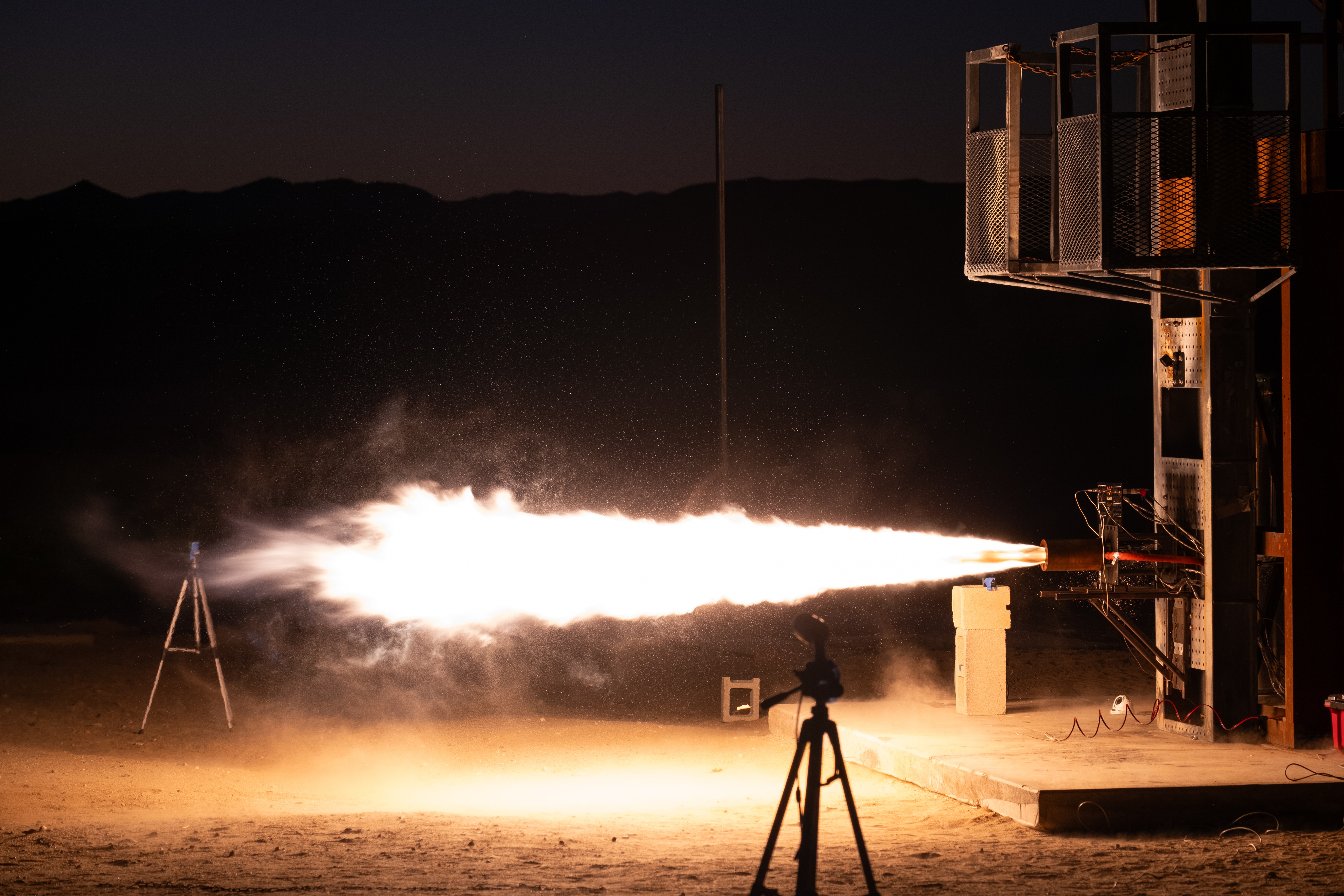
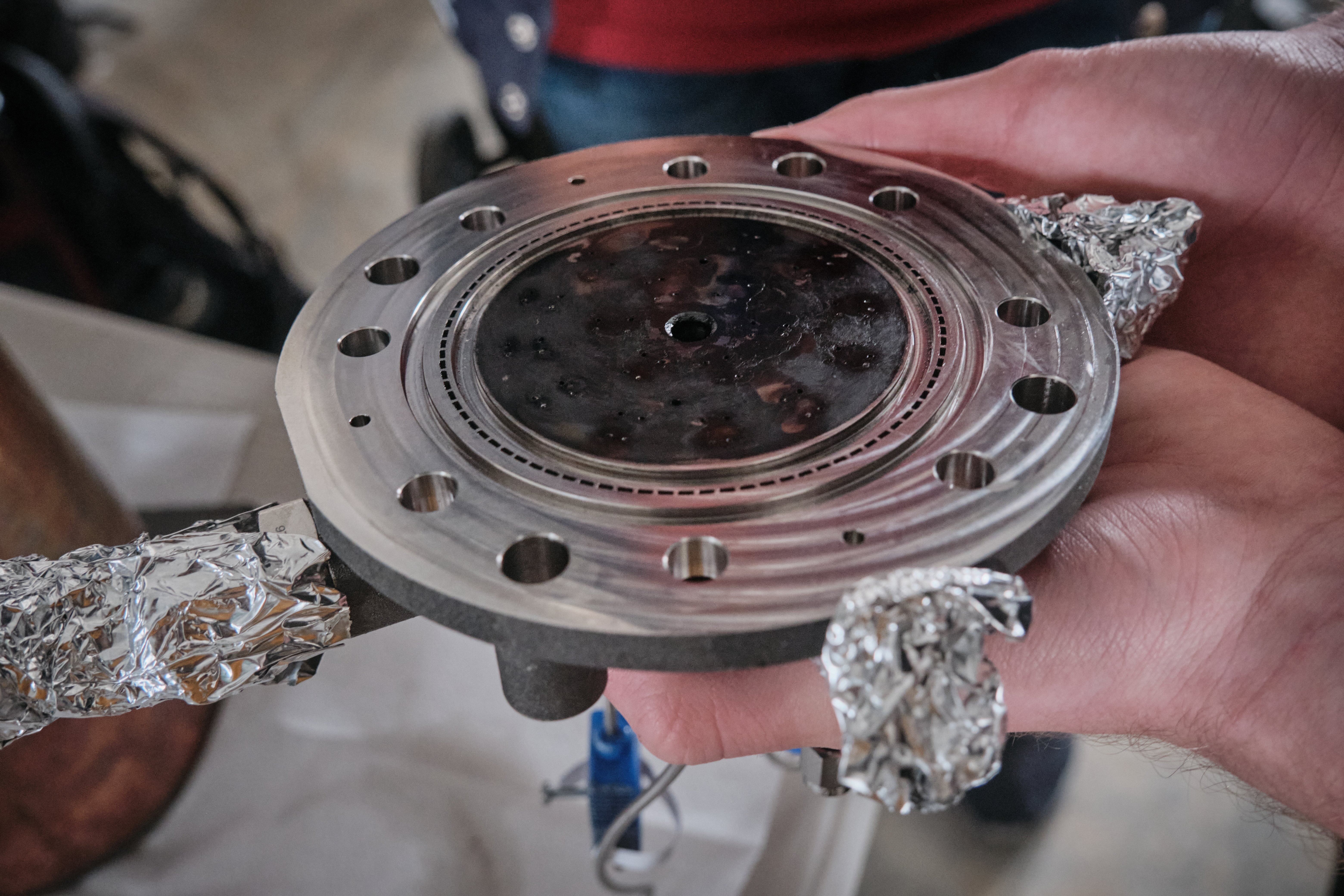
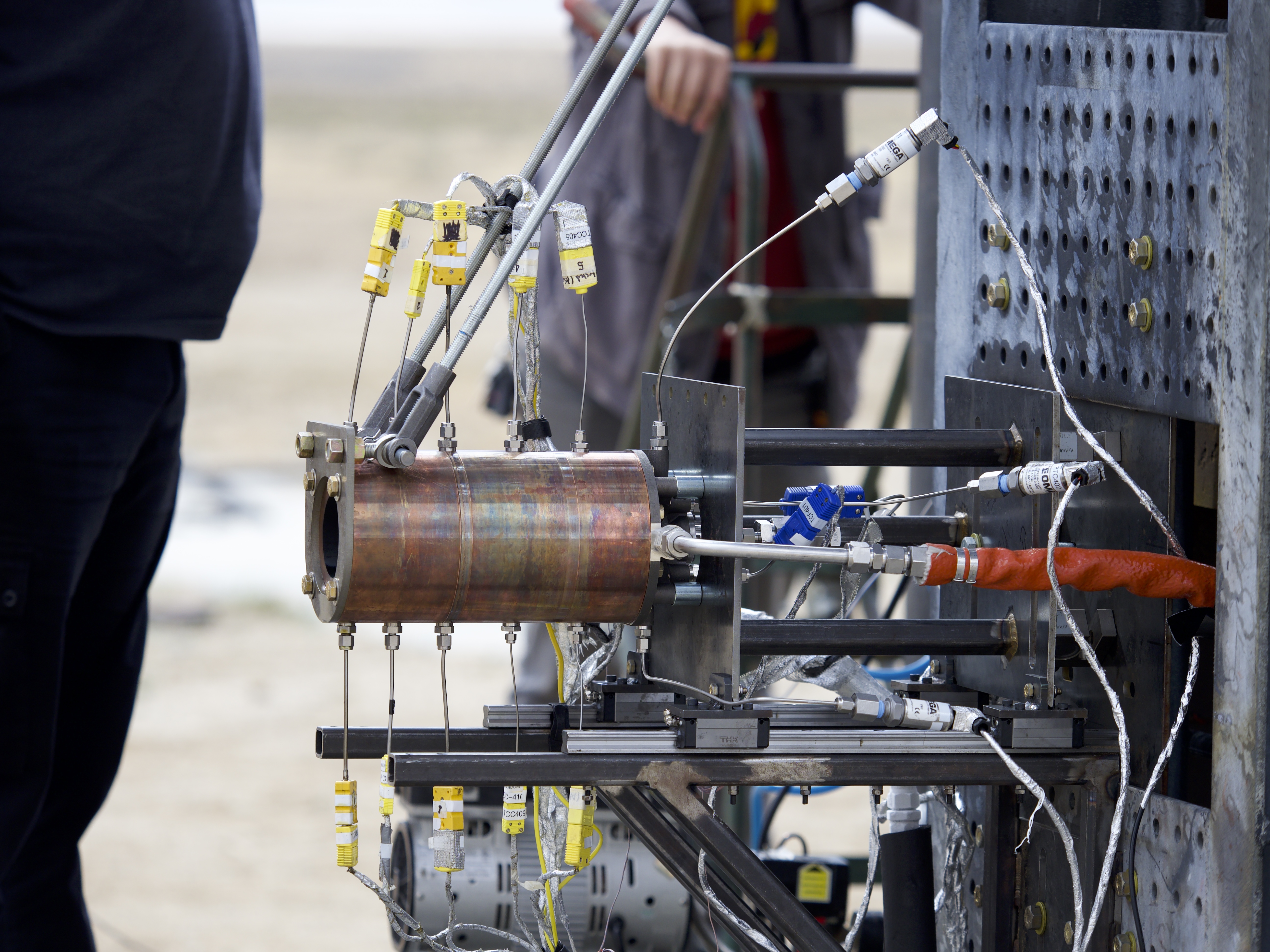
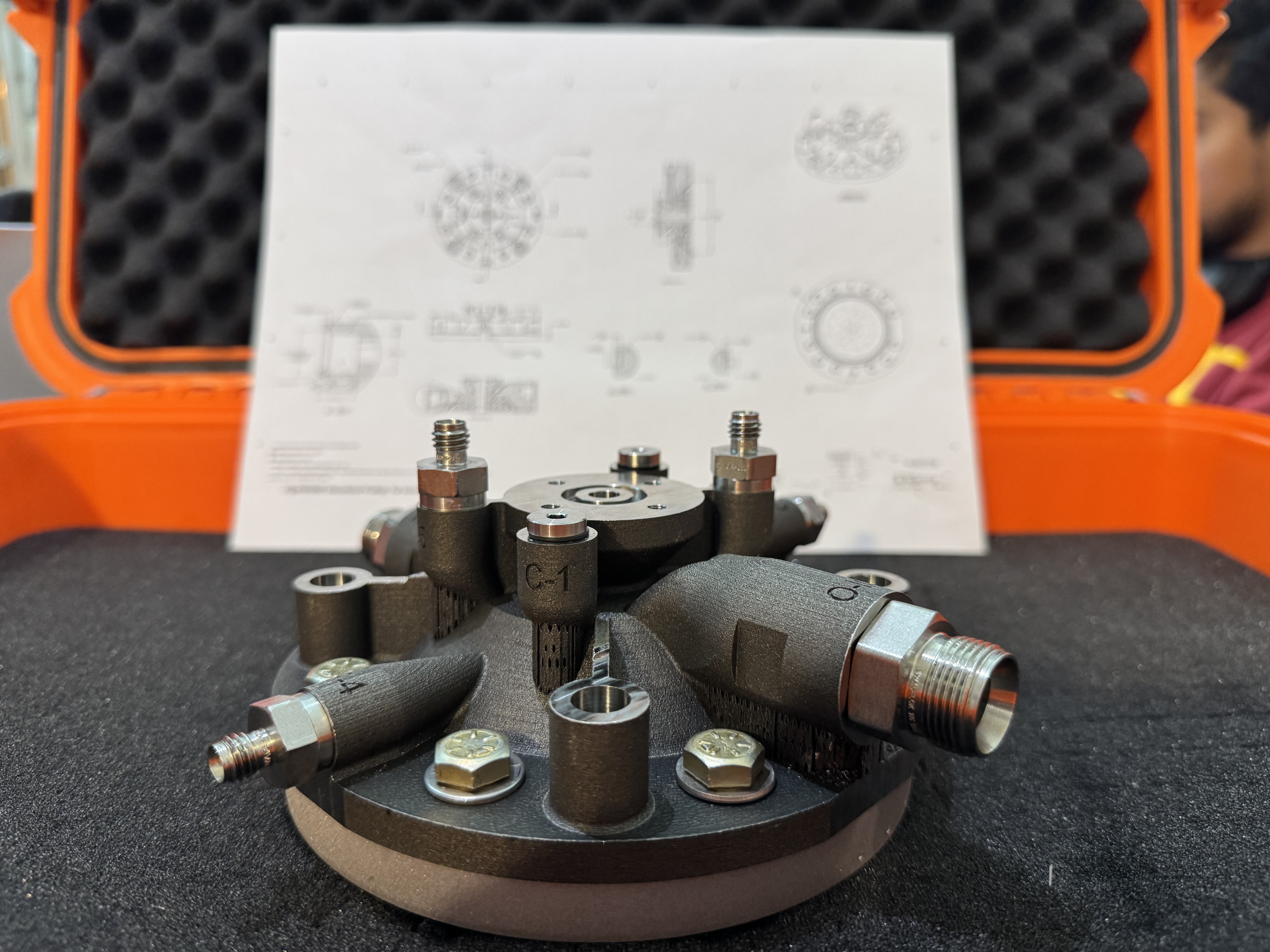
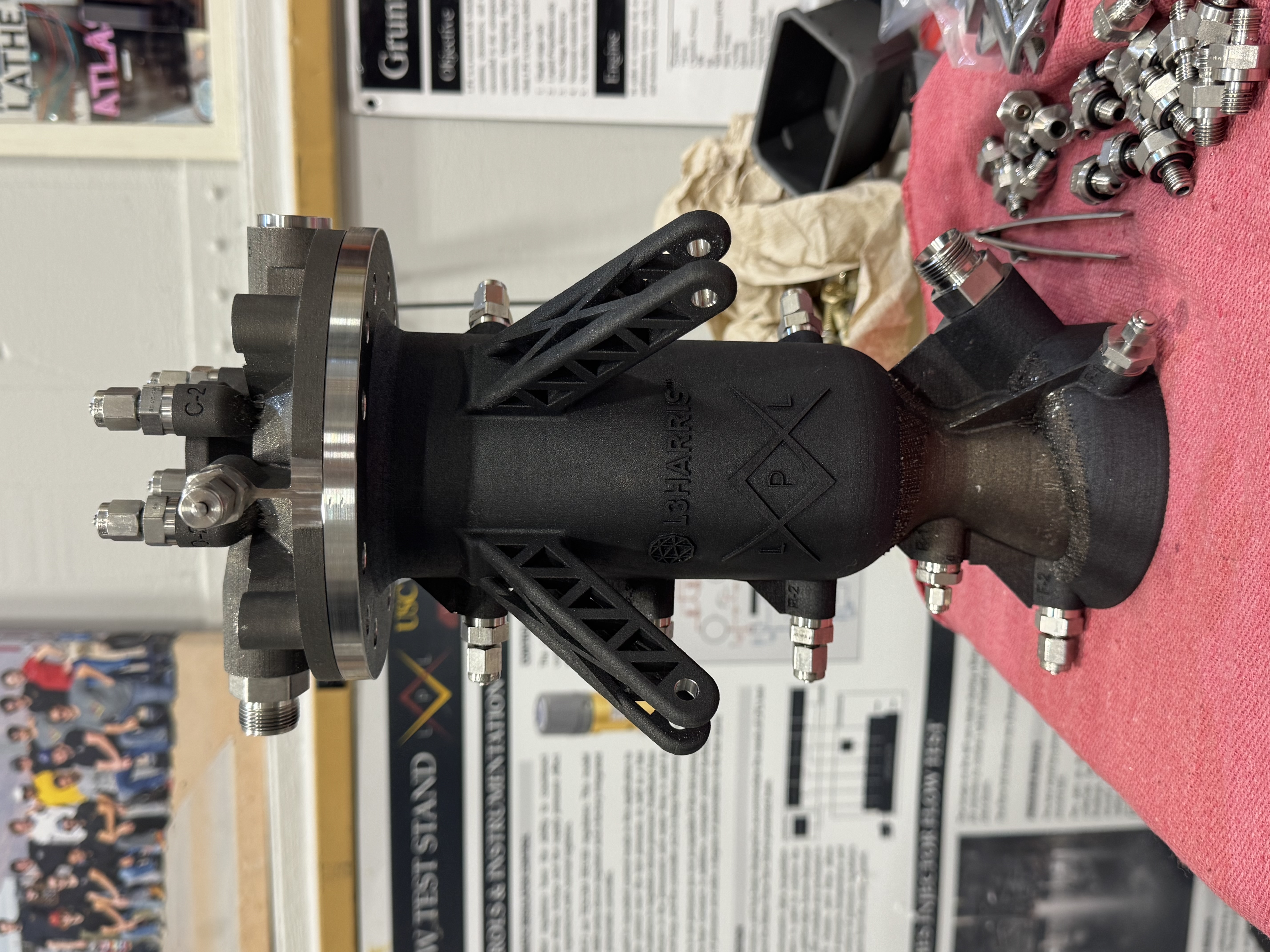
The Nomad engine was conceptualized in September of 2024 as the next step in LPL's engine development history and as the first step in LPL's venture into flight hardware. Nomad, the engine that will power the Ranger 1 vehicle, was developed to be a robust testbed for technologies across the lab, from providing multitudes more data for regenerative cooling analysis than we had ever received, and to it's high-stiffness injector designed specifically for deep throttling, to TVC actuator attachment struts, Nomad was designed as much more than just another engine.
To date, Nomad has been fired 8 times in its heatsink configuration, comprised of the additively-manufactured injector alongside a solid copper heatsink thrust chamber designed to reduce hardware risk. Through these hotfires, we've gained critical data allowing us to characterize the Nomad injector and thrust chamber design. Designed for an expectation of 85% c* efficiency, Nomad has showed 93% c* efficiency across this characterization testing.
Unfortunately, during testing leading up to a recent hotfire trip, the regeneratively-cooled chamber was damaged, resulting in the retirement of that chamber. While setbacks are unfortunate, they are unavoidable, and the team has taken the lessons learned from that mistake and continued to develop our procedures, ensuring that this does not happen in LPL's future.
Looking forward, this retirement offered a unique opportunity to iterate on Nomad's design. The Nomad 2 chamber design is aimed to simplify processing, machining, and test setup, all while improving performance. Through further iteration to LPL's REPDA MATLAB software, the team was able to improve regenerative cooling performance while simultaneously increasing our chamber wall thickness by 50%, significantly improving margin to the failure mode the first chamber saw.
Nomad represent's LPL's commitment to iterative design, our rapid test cadence, and drive towards building and flying Ranger 1 later this year.